


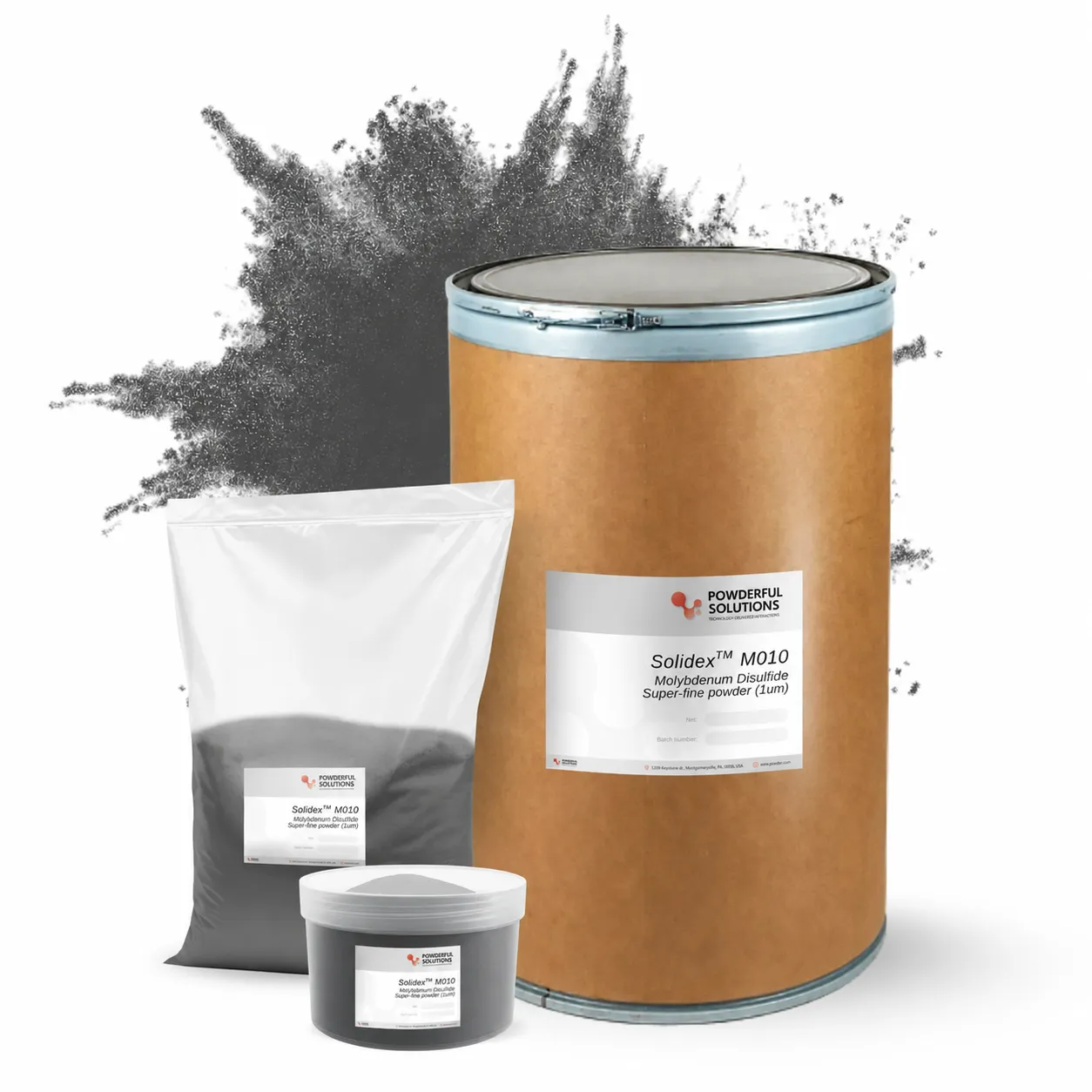
MoS₂ powder
Solidex™ M010
1 µm MoS₂ super-fine powder. Confirm suitability for the exact binder, carrier, target film thickness, and application process with the TDS.


Powderful Solutions
Need technical help?
Tell us what you're working on.
Standard and surface-modified powders in engineered particle sizes for companies developing resin-bonded, water-dispersion, oil-dispersion, burnished, release, and high-temperature solid lubricant systems.
Powderful Solutions supplies the solid lubricant powders used by manufacturers to formulate high-performance dry-film and bonded coatings. We do not apply finished coatings. We help formulators select an appropriate material, particle size, surface treatment, and grade for their binder and application system.
A coating's performance depends on more than the intrinsic properties of MoS₂, WS₂, or hBN. Particle dispersion, binder compatibility, coating thickness, substrate preparation, cure cycle, and application method all influence the final friction, wear, adhesion, and temperature performance.
Selecting an unsuitable particle grade or surface treatment can reduce coating consistency even when the base material has strong tribological properties.
Each solid lubricant provides a different balance of load capacity, friction behavior, color, oxidation resistance, electrical properties, and cost.
| Material | Best Suited For | Main Advantage | Key Consideration |
|---|---|---|---|
| MoS₂ | Industrial, automotive and defense coatings | Strong EP performance and cost-to-performance balance | Dark color and lower oxidation resistance than WS₂ |
| WS₂ | Aerospace, precision and high-temperature systems | Very low friction and greater thermal stability | Higher material cost than MoS₂ |
| hBN | White, electrically insulating and thermal-process coatings | White color, electrical insulation and thermal stability | Lower EP load capacity than MoS₂ or WS₂ |
| Blends | Application-specific and multifunctional formulations | Combines friction, release, thermal or visual properties | Ratios and binder compatibility must be validated |
The confirmed Solidex™ range below includes standard powders and selected surface-modified hBN grades for oil or water dispersions. Product suitability for a specific binder, carrier, coating process, and cure system should be confirmed against the corresponding TDS and through formulation testing.
Dark solid-lubricant powders for friction, wear, and load-bearing development.
1 µm MoS₂ super-fine powder. Confirm suitability for the exact binder, carrier, target film thickness, and application process with the TDS.
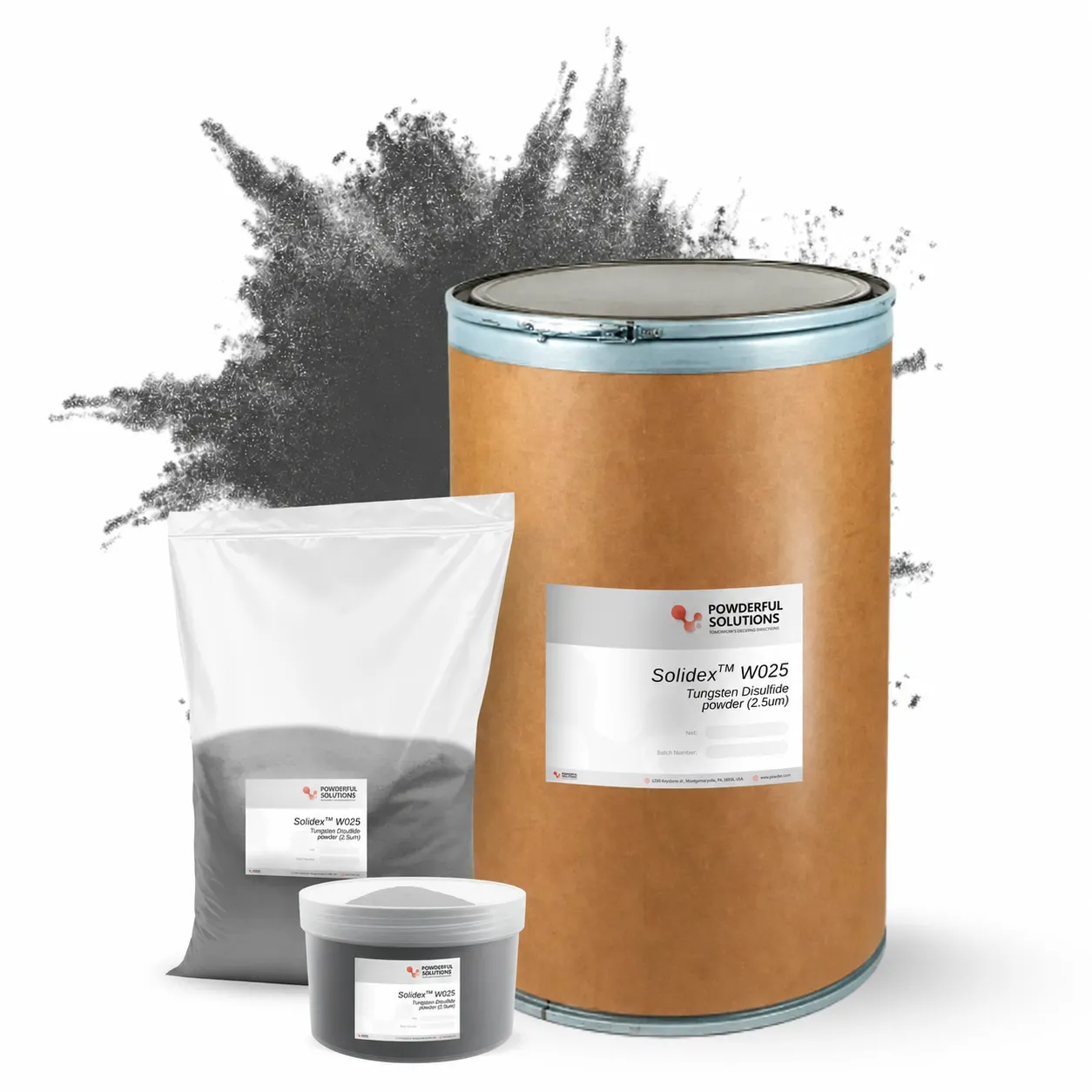
2.5 µm WS₂ powder. Confirm suitability for precision, bonded, or application-specific coating development with the TDS and finished-system testing.
White hBN grades from 0.5 to 20 µm, including options modified for oil or water dispersions.
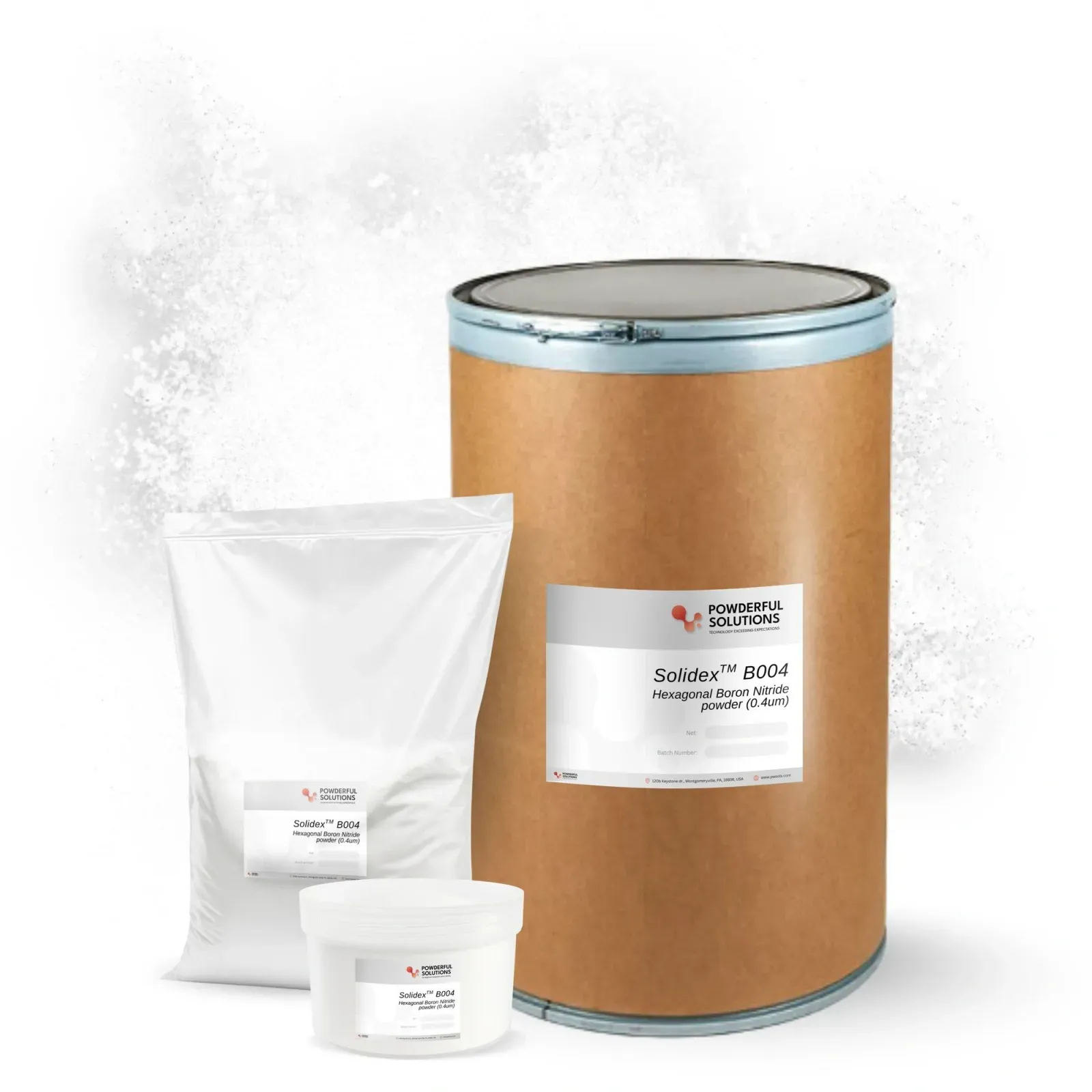
0.5 µm hBN powder for fine-particle formulation development. Confirm binder compatibility, dispersion method, and target film thickness with the TDS.
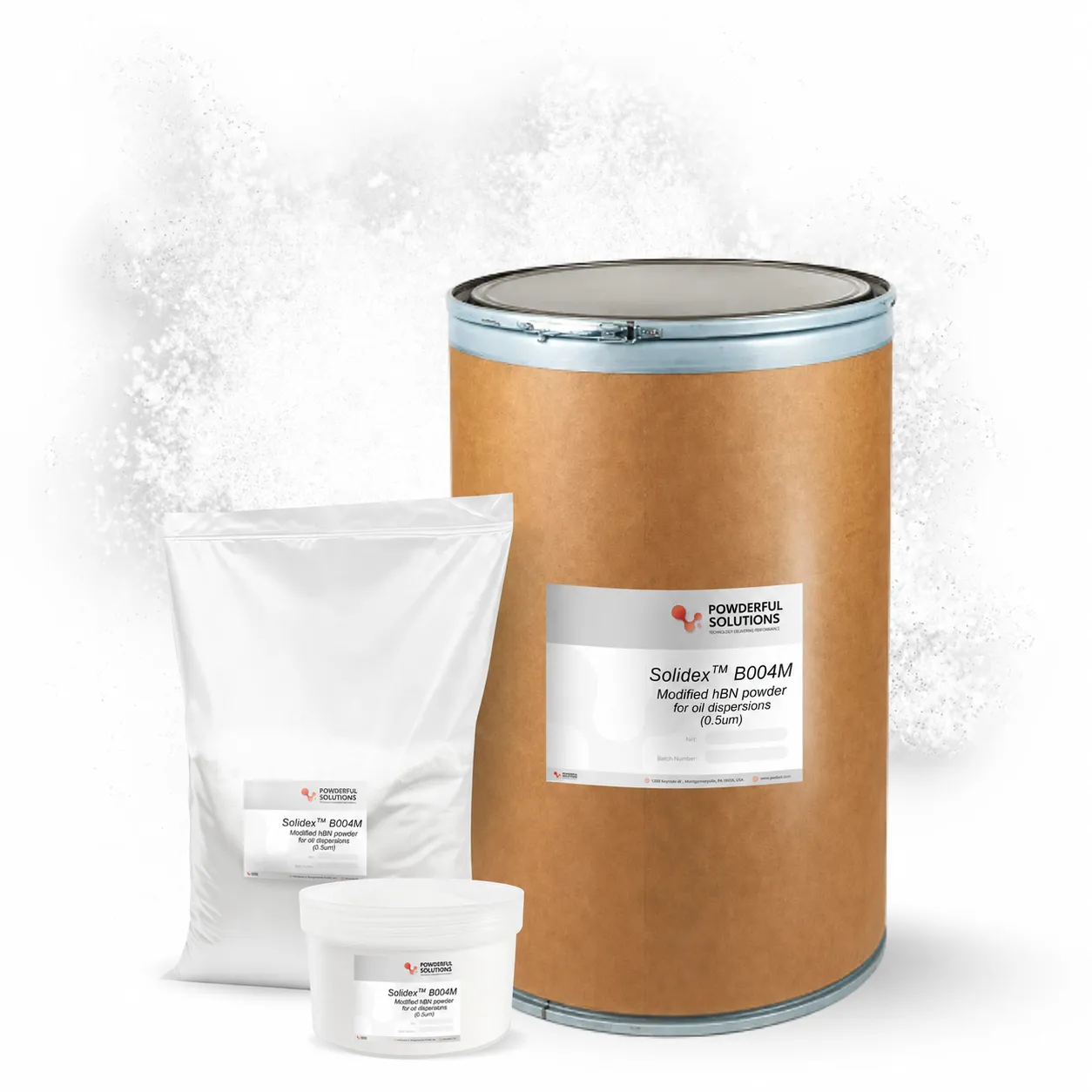
0.5 µm surface-modified hBN powder for oil dispersions. Confirm compatibility with the specific oil, additive package, binder, and manufacturing process.
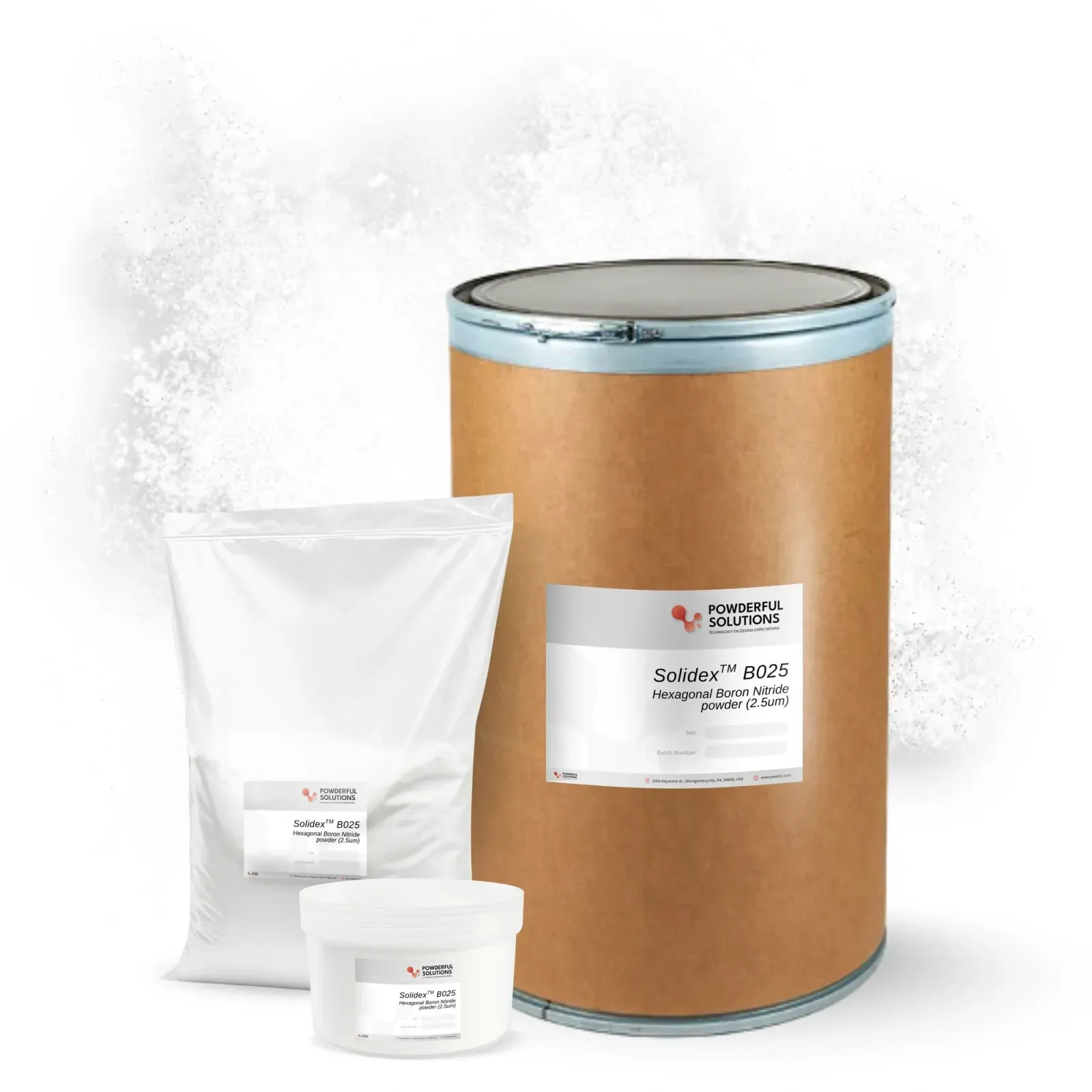
2.5 µm hBN powder. A mid-size option for formulation development where film thickness, surface finish, release behavior, and dispersion must be balanced.
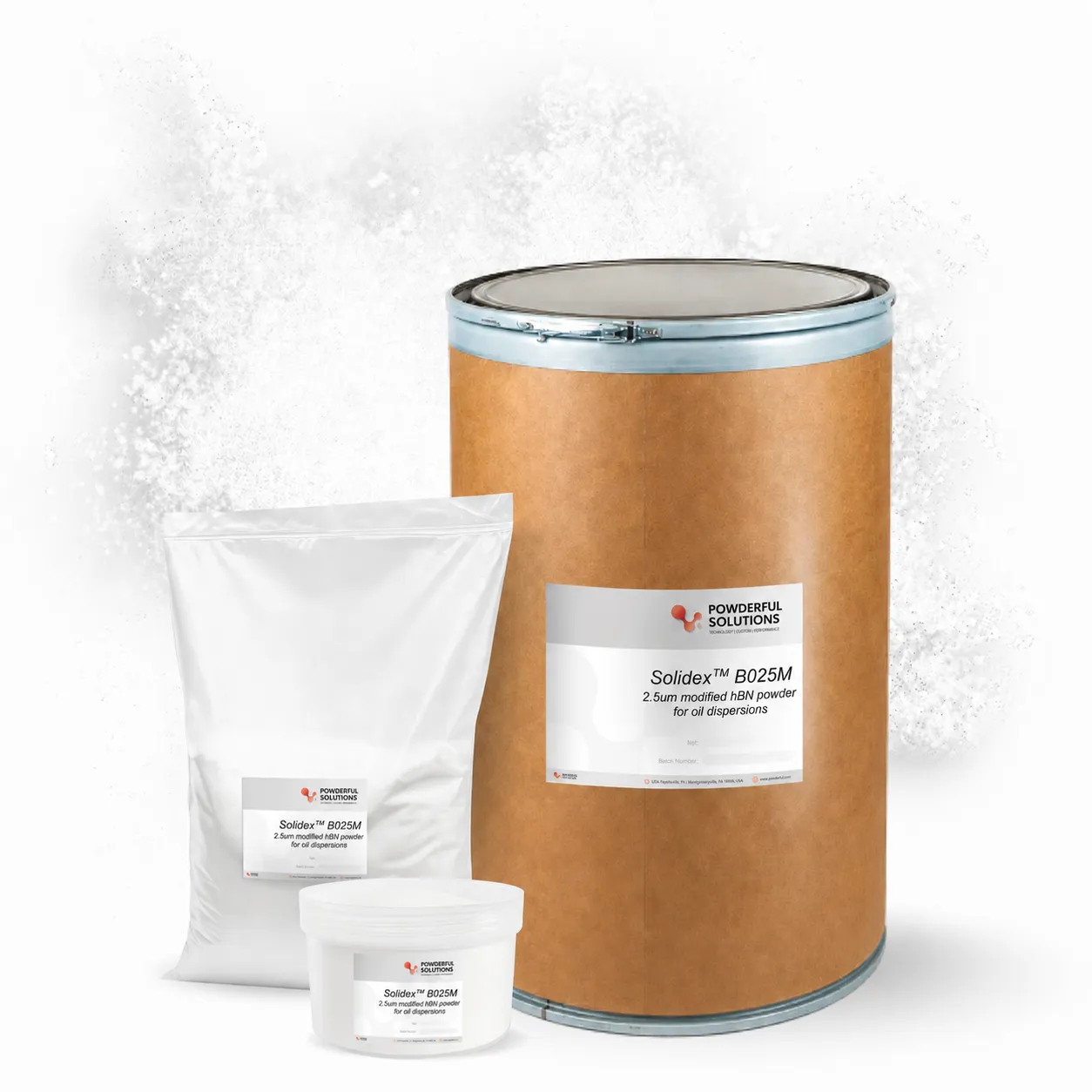
2.5 µm surface-modified hBN powder for oil dispersions. Confirm oil-system compatibility, sedimentation behavior, and processing conditions with the TDS.
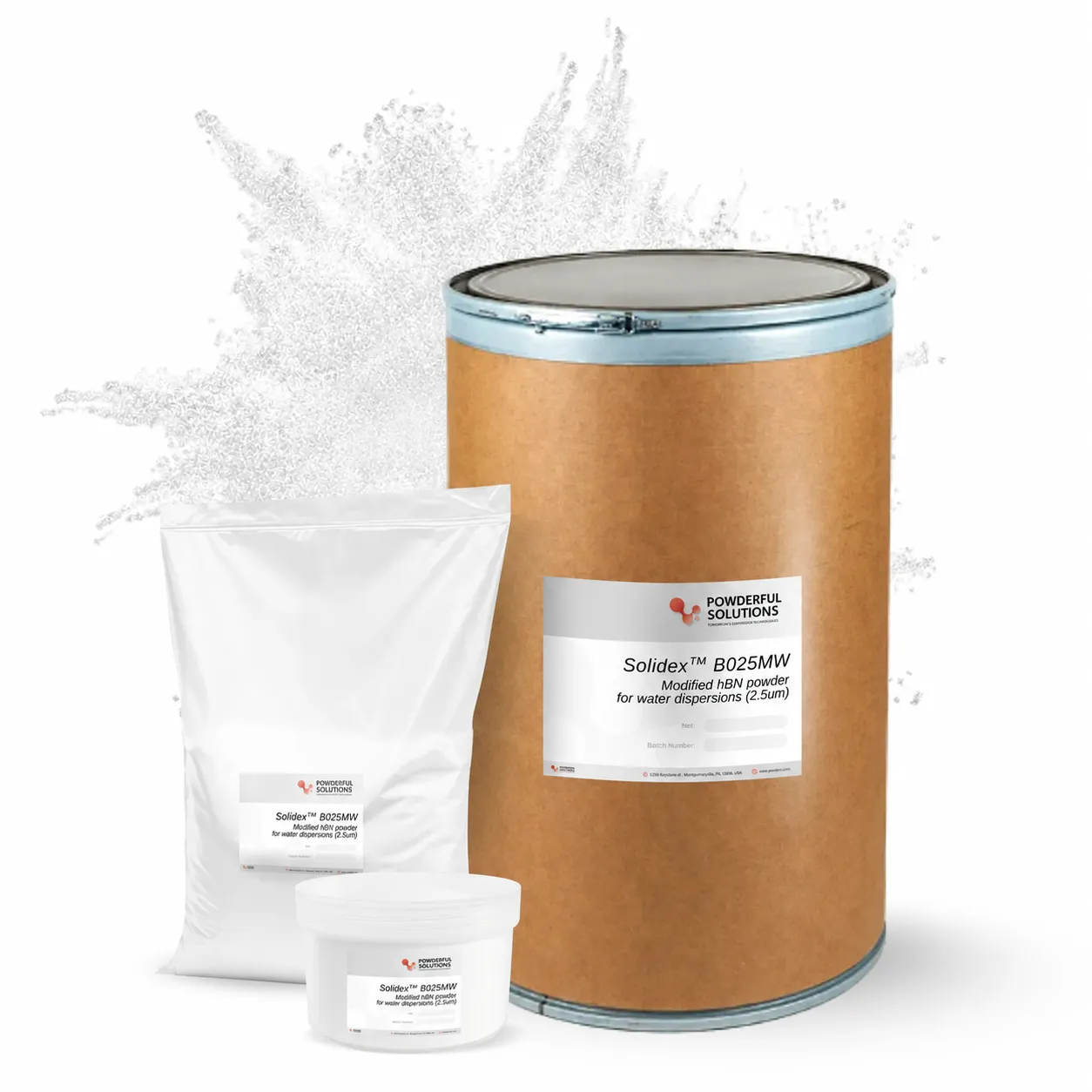
2.5 µm surface-modified hBN powder for water dispersions. Validate compatibility with the exact waterborne binder, dispersant, pH, and manufacturing process.
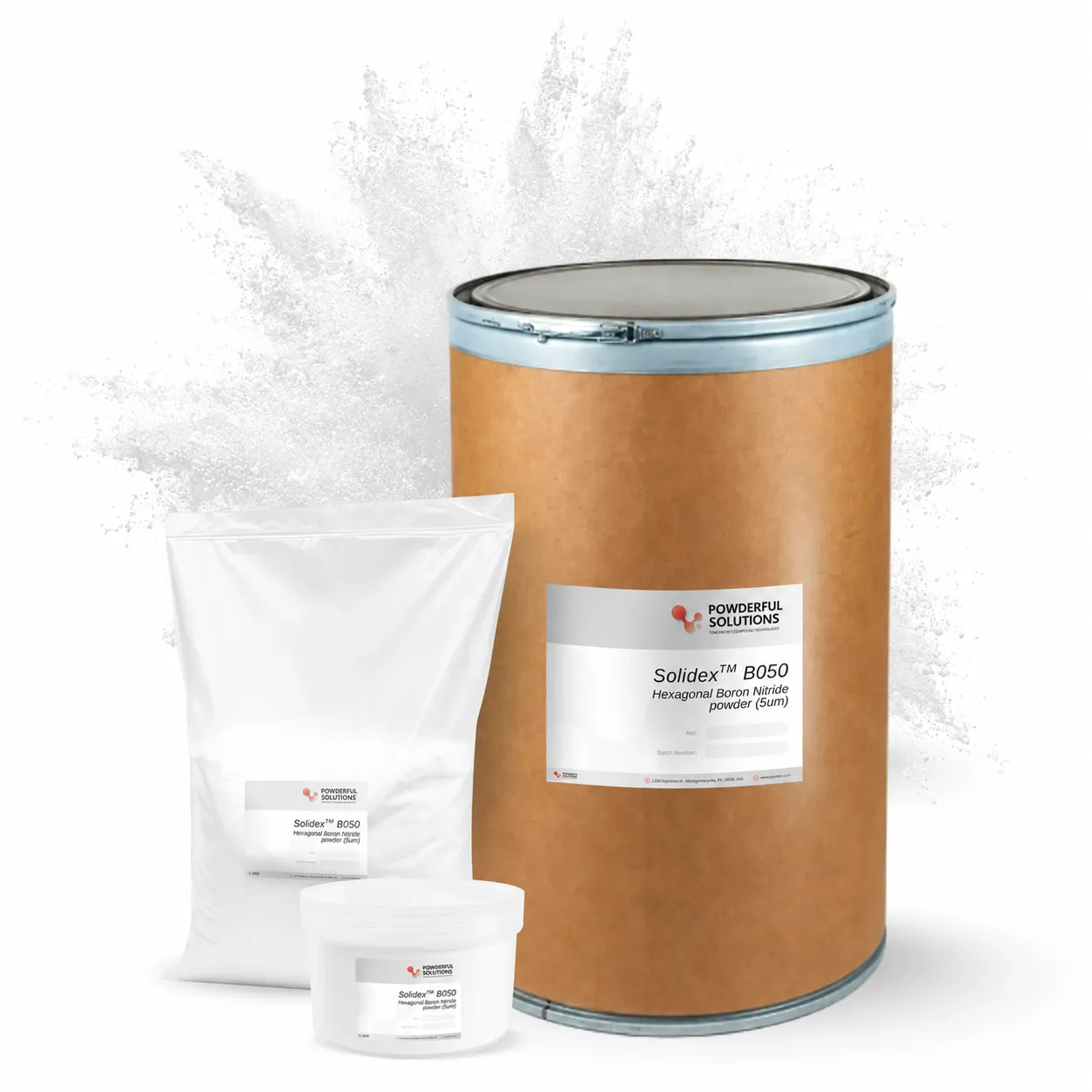
5 µm hBN powder. Consider where a larger particle grade is compatible with the target film thickness, surface finish, release behavior, and application method.
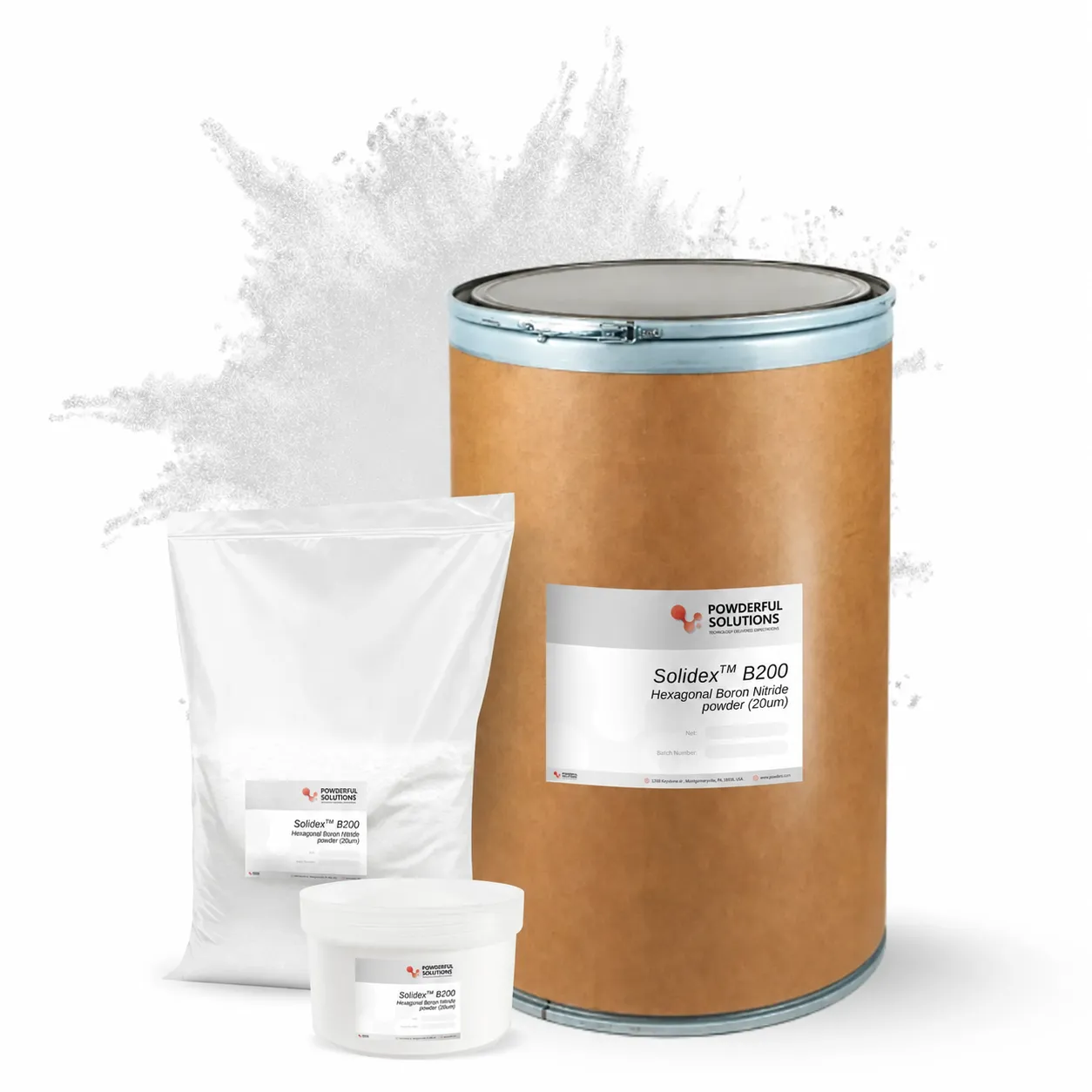
20 µm hBN powder. Intended for development work where a coarser particle size is compatible with coating thickness, process conditions, and the required surface profile.
| Product | Material | Nominal Particle Size | Grade Type | Confirmed Dispersion Orientation | Request |
|---|---|---|---|---|---|
| Solidex M010 | MoS₂ | 1 µm | Super-fine powder | Confirm with TDS | Sample / TDS |
| Solidex W025 | WS₂ | 2.5 µm | Standard powder | Confirm with TDS | Sample / TDS |
| Solidex B004 | hBN | 0.5 µm | Standard powder | Confirm with TDS | Sample / TDS |
| Solidex B004M | hBN | 0.5 µm | Surface-modified | Oil dispersions | Sample / TDS |
| Solidex B025 | hBN | 2.5 µm | Standard powder | Confirm with TDS | Sample / TDS |
| Solidex B025M | hBN | 2.5 µm | Surface-modified | Oil dispersions | Sample / TDS |
| Solidex B025MW | hBN | 2.5 µm | Surface-modified | Water dispersions | Sample / TDS |
| Solidex B050 | hBN | 5 µm | Standard powder | Confirm with TDS | Sample / TDS |
| Solidex B200 | hBN | 20 µm | Standard powder | Confirm with TDS | Sample / TDS |
The confirmed catalog supports four practical selection paths. The product description identifies the powder format or dispersion orientation; final compatibility with a complete coating formulation still requires validation.
M010, W025, B004, B025, B050, and B200 are standard powder grades. Select particle size relative to film thickness, dispersion energy, application method, and required surface finish.
B004M and B025M are modified for oil dispersions. Confirm the exact base oil, additive package, binder interaction, sedimentation behavior, and processing conditions.
B025MW is modified for water dispersions. Validate the complete waterborne system, including binder, dispersant, pH, viscosity, storage stability, and cure process.
The confirmed range spans 0.5, 1, 2.5, 5, and 20 µm. Review the full particle-size distribution rather than relying only on nominal size.
MoS₂ and WS₂ can support controlled friction and help reduce galling or seizure in threaded assemblies and heavily loaded fasteners.
WS₂ and selected MoS₂ grades can be evaluated for precision mechanisms, sliding interfaces, actuators, and components exposed to demanding environments.
MoS₂-based bonded coatings can be considered for sliding components, joints, fasteners, piston-related parts, and other boundary-lubricated surfaces.
hBN, MoS₂, or blended systems can support release, reduced adhesion, controlled friction, and protection of tooling surfaces.
MoS₂ and WS₂ films provide supplementary solid lubrication where sliding contact, oscillation, or intermittent motion occurs.
hBN formulations can be evaluated for release coatings, forming processes, foundry applications, and thermally demanding production environments.
A meaningful recommendation requires information about the full formulation and operating environment, not only the preferred solid lubricant.
Particle-size distribution, purity, morphology, surface treatment, moisture content, and compatibility with the carrier system.
Binder chemistry, solvent or water carrier, solid concentration, dispersant package, viscosity, cure cycle, and target dry-film thickness.
Contact pressure, sliding speed, temperature, humidity, atmosphere, substrate, surface preparation, and expected service life.
Providing the following information helps our technical team recommend a more relevant material and particle grade.
For a broader technical explanation of binder systems, coating mechanisms, material properties, and application considerations, read our dry-film lubricant coating formulation guide.
Read the dry-film coating formulation guide →Tell us about your binder, carrier system, application method, film thickness, and operating conditions. Our technical team will help identify an appropriate MoS₂, WS₂, hBN, or blended material for evaluation.